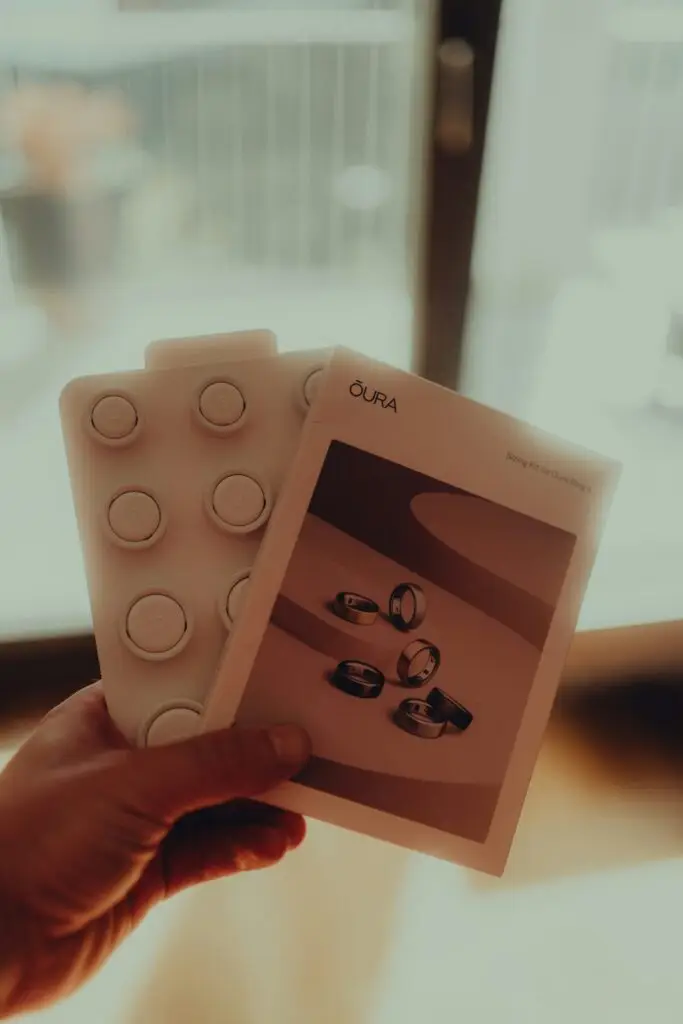
I have been wearing an Oura Ring 5 for three months.
It is one of a growing family of devices that do a version of the same thing. The Oura ring, the Whoop band and the Apple Watch all sit quietly on your body, tracking how you sleep, how your heart behaves and how much you move, and then hand it back to you as numbers.
They have also started an argument. Some people say their device changed how they look after themselves. Others say they took theirs off, because checking a score every morning was making them anxious. So which is it? Data, or dread?
For me it has been a positive, and for three reasons.
The first is sleep. What the ring showed me matched something I already suspected, which is that I wasn’t sleeping well. I had felt it for a while, but a feeling is easy to talk yourself out of. Seeing it in front of me made it harder to wave away. It didn’t tell me anything I didn’t know. It told me I had been right.

The second is my cycle, and this is the one I didn’t expect to value so much. I have PCOS, so my cycle isn’t regular. For years that has meant not really knowing where I am in it. Now everything is logged in one place. I can look back over the months and see for myself whether it is becoming more predictable. There is a real sense of peace in that. I am no longer guessing.
The third is my heart rate. I am a type 1 diabetic, and out of pure curiosity I have started looking at what my heart rate is doing when my glucose is high, or when I am having a hypo. The ring plays no part in how I manage my diabetes. I simply find it interesting to compare the two. I already knew how those moments feel. Now I can see a little of what my body is doing while they happen.
None of these three things is really about a score. They are about understanding my own body a bit better than I did before, and that is why the ring has stayed on my finger.
It didn’t tell me anything I didn’t know. It told me I had been right.
I do understand the other side of the argument. Sleep researchers even have a word for it. In 2017 a team in Chicago coined the term orthosomnia, for a preoccupation with perfecting your sleep data that ends up getting in the way of sleep itself. I can see how that happens. If you wake up feeling fine and a number tells you that you shouldn’t, it is tempting to believe the number.
I think the difference comes down to why you are looking. If you look at your score to be told how to feel, it can become one more thing to worry about. If you look at it to understand yourself, it is simply information, and useful information at that.
So, data or dread? Three months in, my verdict is data.