
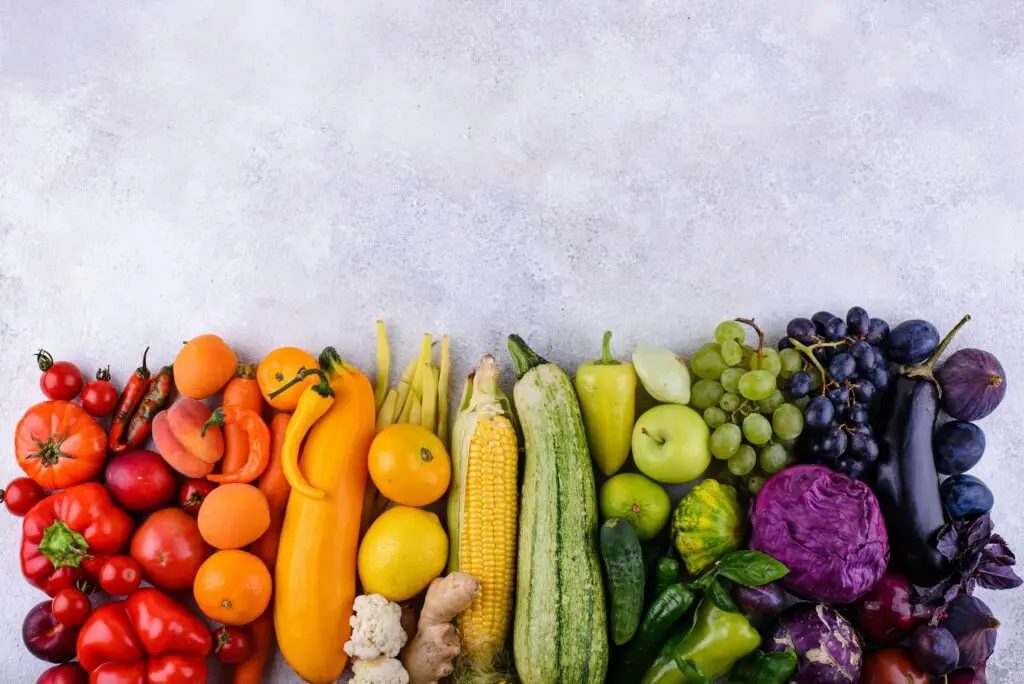
Nature doesn’t do packaging. A tomato has no label. A blackberry has no list of ingredients. What they have is colour, and colour turns out to be a very good clue to what is inside.
That is the idea behind “eat the rainbow”. It sounds like something you would say to a child, and it is. It also happens to be a neat piece of plant chemistry.
Every colour is a different compound
The colour of a fruit or vegetable comes from natural compounds in the plant, and each colour has its own.
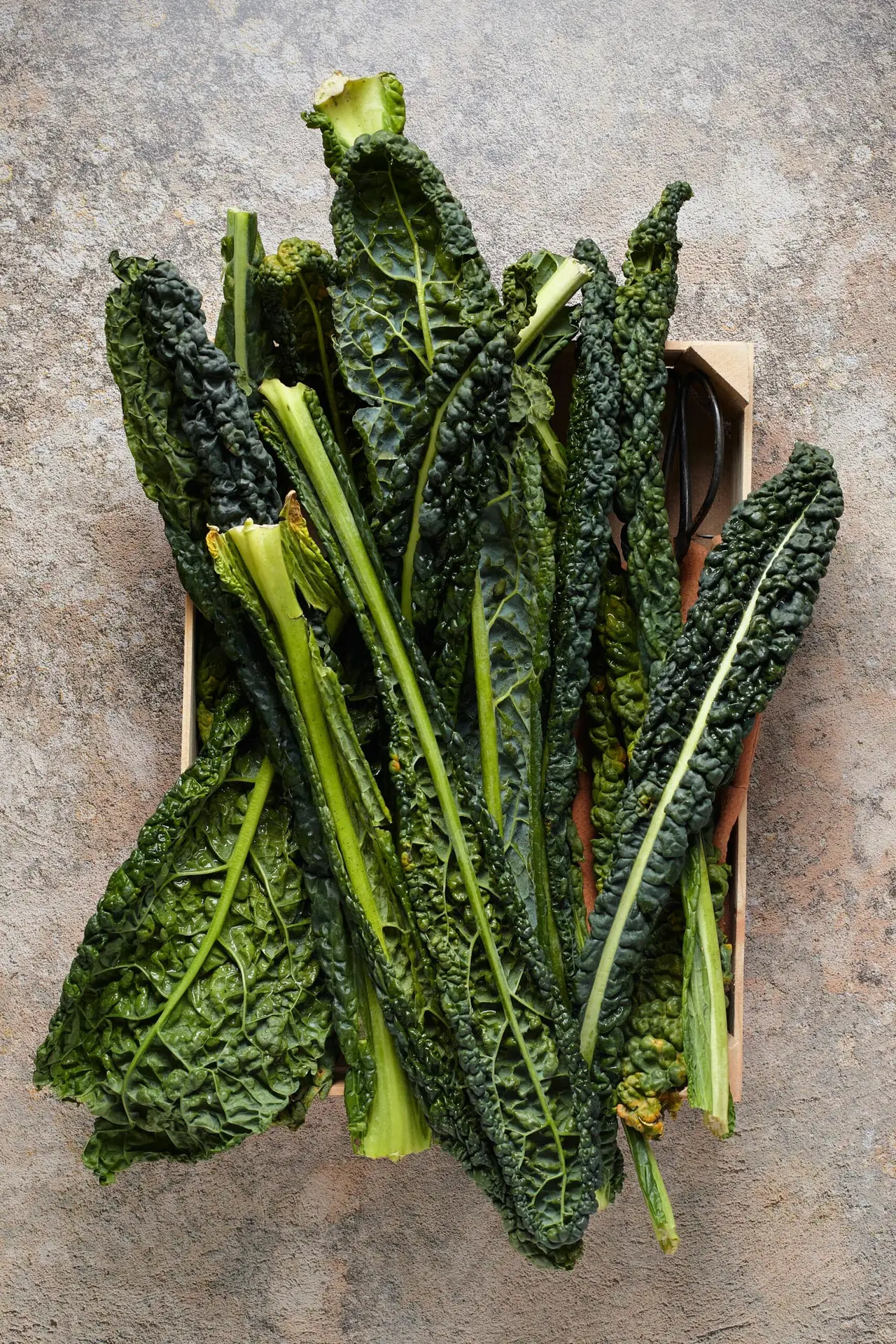
The red of a tomato is lycopene. The orange of a carrot or a sweet potato comes from carotenes, which the body turns into vitamin A. Green is chlorophyll, and greens such as kale and spinach carry two more, lutein and zeaxanthin. The blues and purples of berries are anthocyanins. Even white and beige foods have their own.
So five colours on a plate isn’t decoration. It is five different sets of compounds, and you can count them without reading a single label.
The dark end of the rainbow
This is the part we find most interesting.
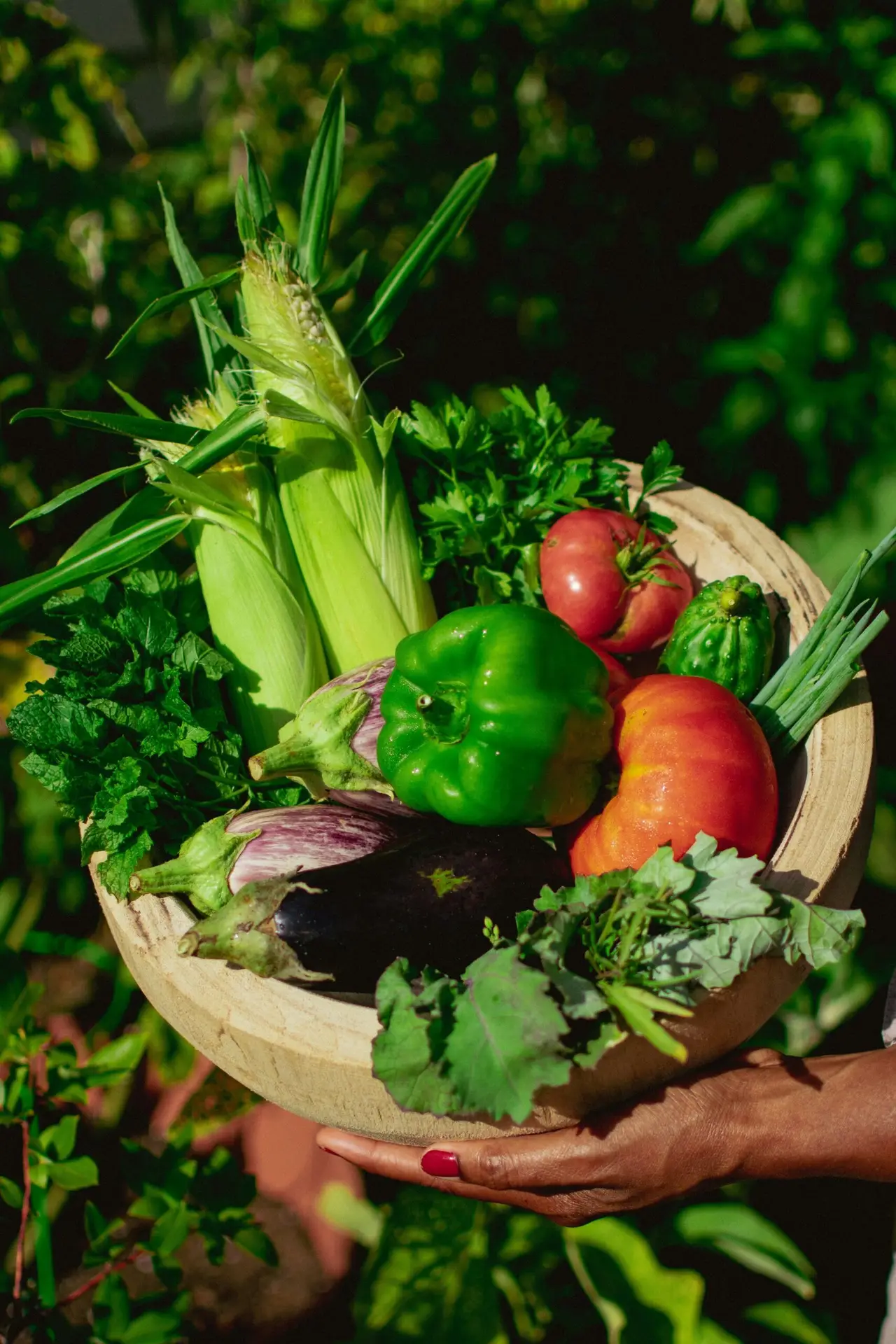
Anthocyanins, the compounds behind red, purple, blue and black, belong to the polyphenol family. That is the same family we wrote about in olive oil. And with these, colour tells you about quantity as well. The deeper the colour, the more there are.
When researchers compared carrots of different colours, the solid black ones had the most anthocyanins. The orange ones had barely a trace.
There was a catch, and it is a useful one. Carrots that were purple only on the outside had very little. The colour has to run all the way through.
So when there is a darker version of something you already buy, try it. Red onion. Aubergine. Purple sweet potato. Red chicory. Black carrots, if you can find them. Researchers have found anthocyanins in every one of them.
The same logic holds at the bright end. In that carrot study, the orange carrots had more carotene than the yellow ones. More colour, more of whatever is making the colour.
Five colours on a plate isn’t decoration. It is five different sets of compounds.
How we eat the rainbow
Count three. Look at your plate before you eat. If you can count three colours, you are doing well. If you can’t, add one.
Buy the darker one. When the same vegetable comes in two shades, take the deeper one home.
Cut it open. The best colour goes all the way through. A sweet potato that is purple right to the middle is the real thing.
Cook your tomatoes. Lycopene is absorbed better from cooked tomatoes than raw, so a slow tomato sauce is doing more than tasting good.
Don’t forget white. Mushrooms, parsnips and bananas all count. A rainbow with no white in it is missing a colour.
None of this turns a blackberry into medicine. Scientists are still working out exactly what these compounds do once we have eaten them. But as a way of choosing what to put on your plate, colour is hard to beat. It is free, it is obvious, and it makes dinner look better.