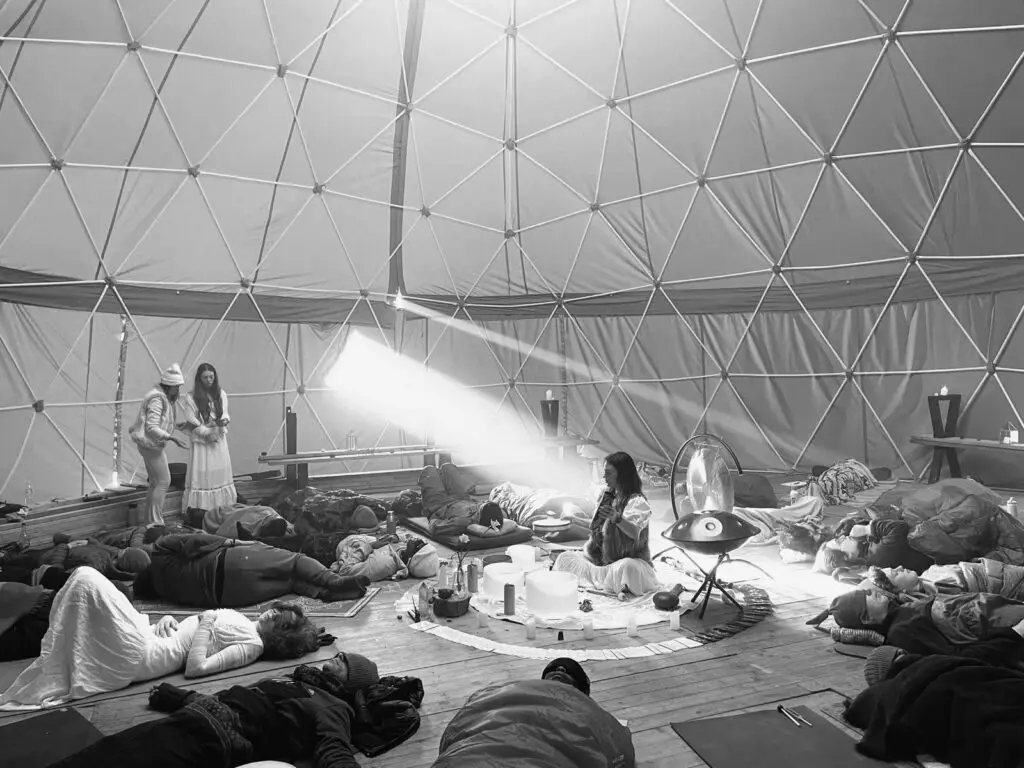
Stand at the centre of a geodome and speak, and something strange happens. Your voice seems to fill your head, as though amplified from within. The sound gathers around you rather than simply travelling away.
Move to another point and the room changes. Whisper in one place, and someone opposite hears you with surprising clarity, as though the distance between you has disappeared.
That was when I stopped thinking of architecture as a container for sound and began to wonder: what if architecture itself is an instrument?
I came to this question from two directions. As an architect, I worked on luxury resorts and hotels across Europe and the Middle East, becoming fascinated by bespoke wellness spaces. Alongside this, I turned to sound as a way of finding stillness within a busy corporate world. A personal practice gradually became a path as a sound practitioner. Here, those two worlds meet.
We tend to experience architecture through what we see: form, light, material and proportion. Yet sound is shaping our experience all the time. We hear it, but we can also feel its vibrations through the body. Harsh echoes and persistent background noise can leave us distracted or overwhelmed, whether at home, at work or in a treatment room. Thoughtful acoustics, by contrast, can bring comfort, quiet and ease.
As our need for rest and stillness grows, could sound become another material we build with, much like light?
History suggests it already has.
At Wells Cathedral, the octagonal Chapter House draws the eye upwards, from its central stone column to the branching ribs of the vaulted ceiling. Its geometry brings the room together around a shared centre, reflecting its original purpose as a place of gathering. It is believed to have remarkable acoustics, prompting me to wonder how the space shaped the experience of listening, speaking and being heard.
At Chartres Cathedral, the vast stone interior offers a different encounter. Chant lingers in the reverberant space, overlapping with the next note until individual voices become part of something larger. The architecture doesn’t simply contain the music; its response to sound becomes part of the experience.
At St Paul’s Cathedral, the Whispering Gallery reveals another possibility. Curving around the dome high above the cathedral floor, it allows a whisper close to the wall to travel surprisingly clearly to someone on the opposite side. This acoustic effect was discovered after the cathedral opened, rather than designed as a feature. In the nineteenth century, physicist Lord Rayleigh investigated how sound travels along curved surfaces. It echoes what I have experienced in the geodome: how geometry can make a distant voice feel remarkably close.
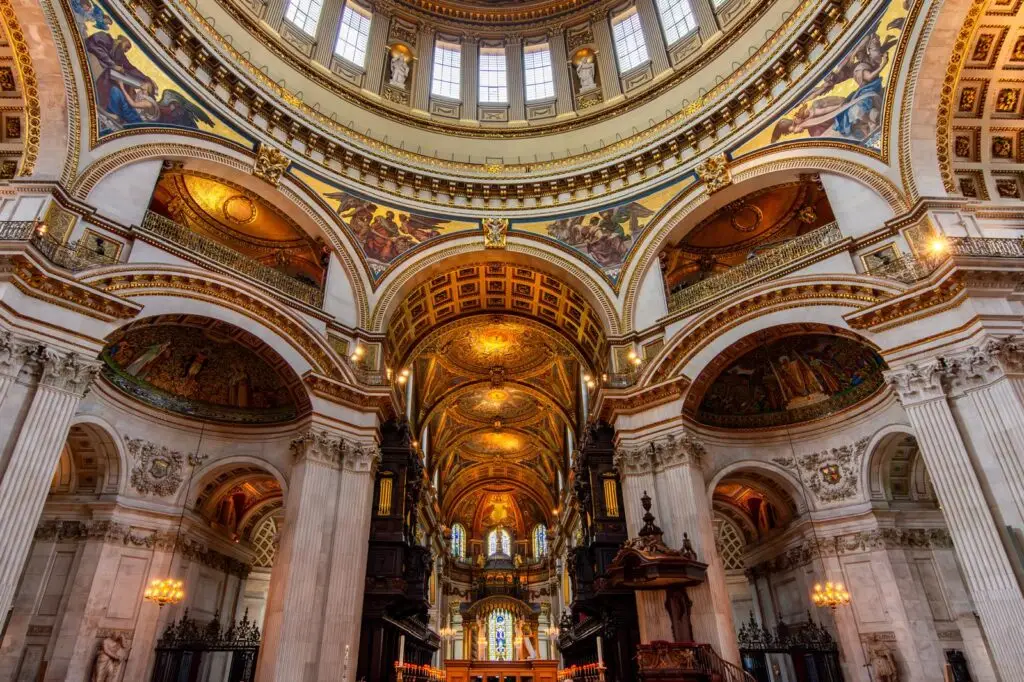
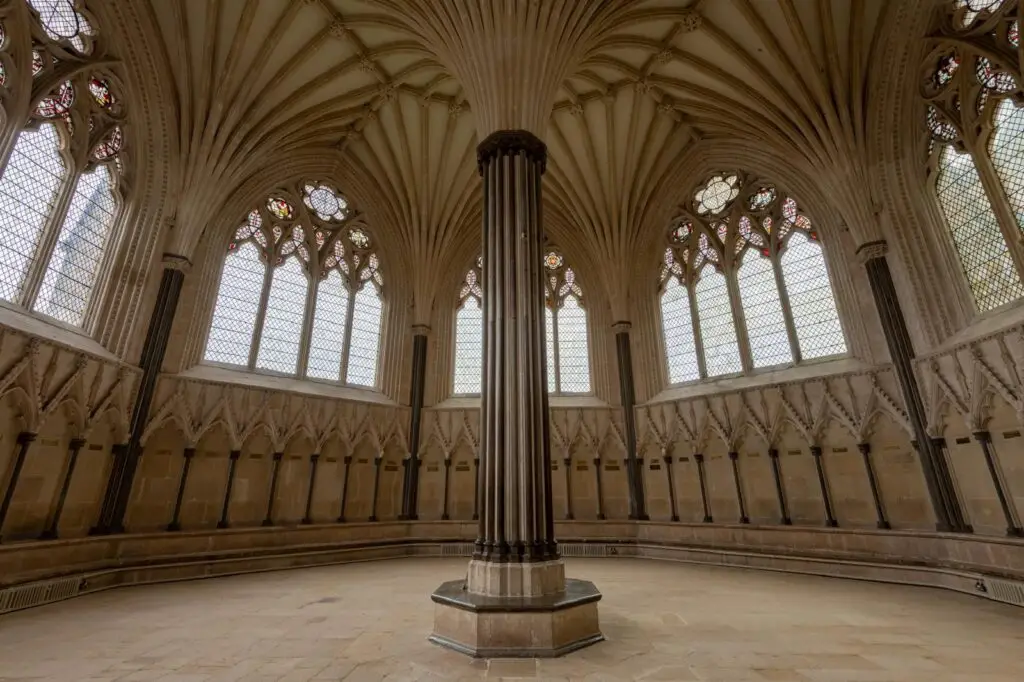
These buildings were not conceived around our modern understanding of sound healing. Yet architecture, voice and ritual were deeply intertwined. The rhythms of chant, the resonance of stone and the act of gathering all contributed to an experience in which the space itself played a part.
Today, this relationship is being explored more intentionally. At the Vitra Campus in Weil am Rhein, the Doshi Retreat, the final work of architect Balkrishna Doshi, was completed with his granddaughter Khushnu Panthaki Hoof and Sönke Hoof. It invites visitors into a carefully choreographed encounter with sound and space. The journey moves underground, through changing light and sounds that guide you forward, before opening into a circular chamber around a pool of rainwater, with stone seating and a gong beneath an aperture to the sky. Here, architecture becomes part of the listening experience, bringing sound, material, water and the body into conversation.
In Singapore, Future Resonance brings a related ambition into an urban setting. Developed from the experience of Pyramids of Chi in Bali, it explores how sound and immersive environments might offer restoration within the city. Housed in a former school building at New Bahru, the project occupies former science laboratories, transforming a place of intellectual experimentation into one of sensory exploration.
The experience unfolds across two spaces. Solar Space is warmer and more grounded in traditional sound healing, using acoustic instruments and soundscapes. Lunar Space takes a more experimental approach, using Light Sound Vibration (LSV) and technology to create an immersive sensory environment. Through waterbeds, light and vibration, alongside live instruments such as crystal bowls, chimes and gongs, visitors encounter sound in different ways. A building once associated with learning takes on a new role: creating space to pause, listen and reconnect amid the pace of city life.
Because sound isn’t only something we hear. We feel it.
Resonance also exists beyond the built environment. The Earth has measurable electromagnetic resonances, known as Schumann resonances, which arise in the space between its surface and the ionosphere. These are not musical tones, nor evidence of a direct therapeutic effect, but they remind us that resonance is part of the physical world.
Tunings such as 432 Hz are explored in sound practices for their perceived qualities of calm and harmony, although evidence for unique effects on the body remains limited. It is something I have regularly felt in my own practice. What interests me is the wider design question: how might sound, like light and material, influence our experience of a place?
What would happen if we designed a space by listening first?
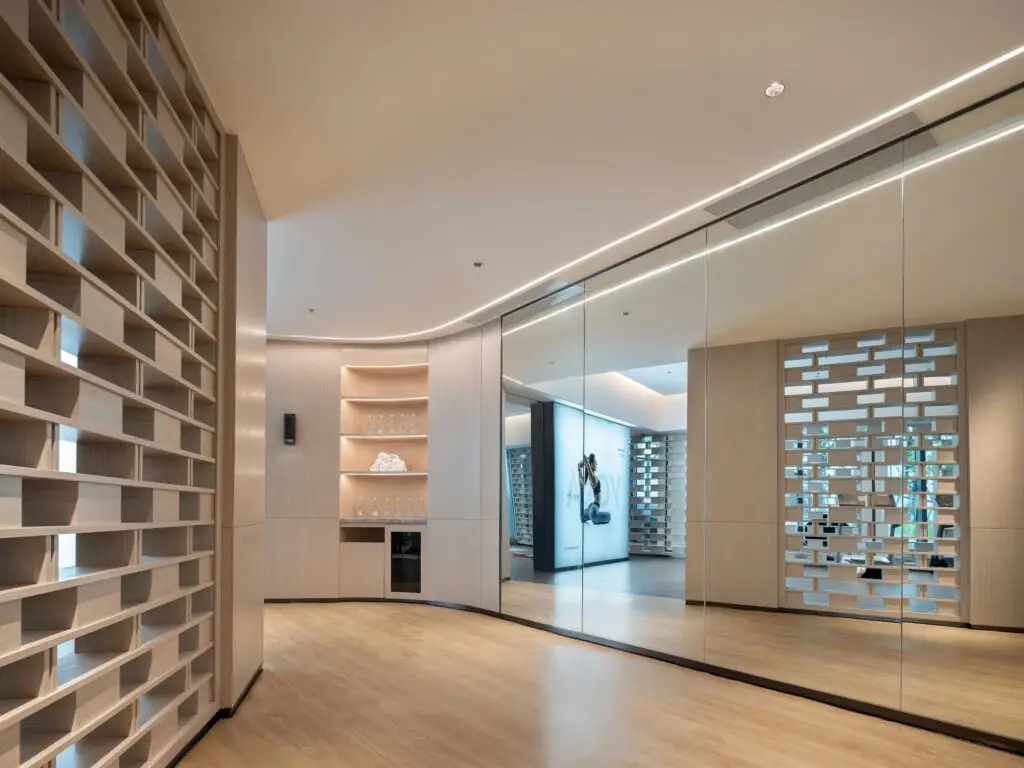
Imagine a domed room where a whisper travels from one side to the other. A treatment room shaped around the way a single tone moves and fades. Materials selected not only for their appearance, but for how they absorb, reflect or carry sound. Where does a gong resonate most fully? How does a voice move through the room? Where might silence be protected?
What if sound were considered from the beginning, shaping not only how a space looks, but how it feels to inhabit it?
Because sound isn’t only something we hear. We feel it.
Maybe architecture has always been listening. We’re just beginning to listen back.
Bracken Roots is a sound practitioner and the founder of Sacred Sound Sister. sacredsoundsister.com