When people think about technology in the home, they usually think of televisions, speakers and screens.
I think about it differently. I am interested in how technology can support our wellbeing at home.
That covers a lot. It is the air we breathe indoors and the water we drink. It is the light we live in, the temperature of our rooms and the way we keep our homes clean. Most of this technology is not exciting to look at, and a lot of it you will never see. But it has more effect on how a home feels than almost anything else.
This is what I look at as an interior designer, and where I would start.
Air
We think of pollution as something that happens outside. But the US Environmental Protection Agency has found that Americans spend around 90 per cent of their time indoors, where levels of some pollutants are often two to five times higher than they are outdoors. Cooking, cleaning products, paint and new building materials all add to it.
The agency’s advice is simple. Deal with the source first. Then bring in clean outdoor air. Filtration comes third, as a useful extra.
If you are building or renovating, a ventilation system that brings fresh, filtered air into every room is worth planning from the start. If you are not, open the windows, and put a good air purifier in the rooms where you spend the most time. An air quality monitor will show you what is in the air, which is a helpful first step.
Water
A water filter is one of the simplest upgrades there is, and one of the most confusing to buy. The question to ask is: what is it certified to remove?
The standards come from an independent body called NSF. One covers taste and smell, such as chlorine. Another covers contaminants with an effect on health, such as lead. A third covers newer contaminants that are not yet regulated. A filter that has earned them will say so. No single certificate means a filter removes everything.
My preference is a filter under the sink with its own tap. Nothing sits on the worktop, and filtered water becomes the normal water in the kitchen.
Light
Light has a direct effect on how we sleep.
Harvard Medical School’s health publication explains that light at night suppresses melatonin, a hormone that influences our body clock, and that blue light does this most powerfully. Even dim light can interfere. Its advice is plenty of bright light in the day and very little at night.
So I plan lighting around the time of day. Bright and cool where you start the day. Warm and low where you end it. Lamps in the evening, not ceiling lights. Smart bulbs can make that change automatically, so you do not have to remember.
Temperature
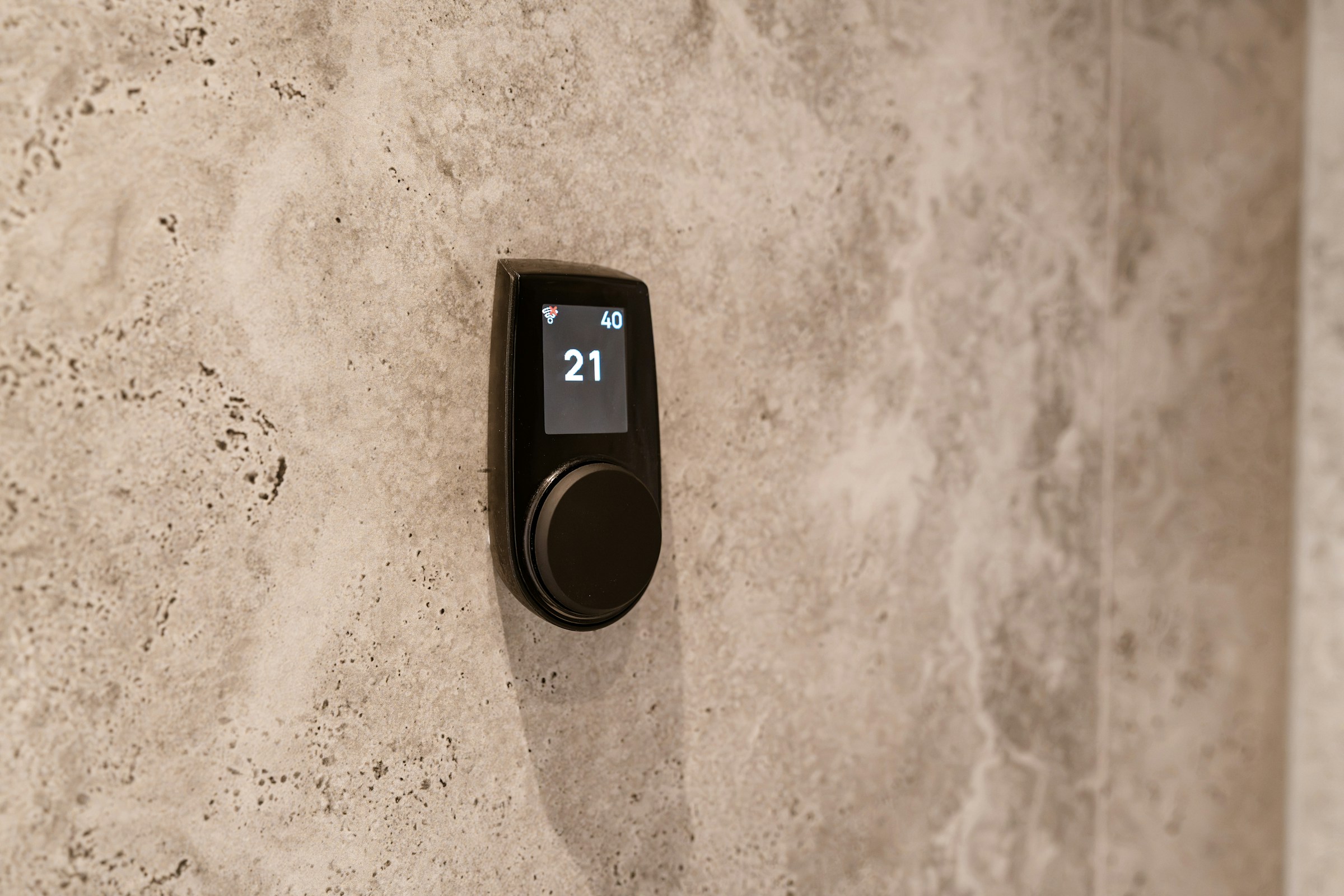
The Sleep Foundation puts the best bedroom temperature at about 18 degrees. The body’s temperature drops as we sleep, and a cooler room makes it easier to fall asleep and stay asleep.
That is cooler than many people keep a bedroom. Smart heating controls let you set a different temperature for each room, so the bedroom can be cool while the bathroom is warm.
Cleaning
Cleaning is part of this too. Dust builds up in every home, and keeping on top of it takes time.
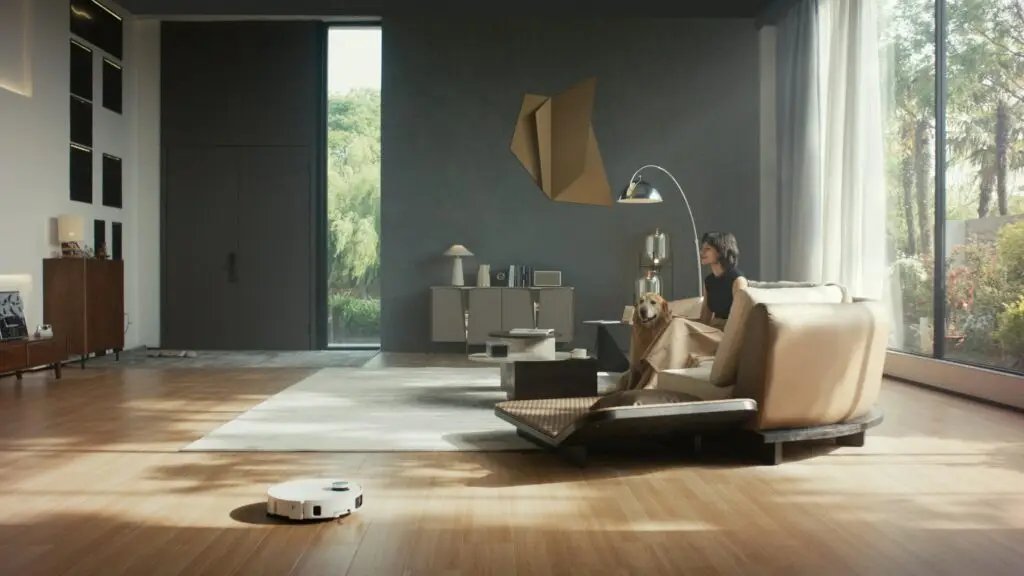
Robot vacuums have made that easier. Brands such as Dyson and Shark make models that map your rooms, clean on their own and return to their base. Some also mop, and empty themselves. Shark says the sealed base on its PowerDetect robot traps up to 99.9 per cent of dust and allergens.
The benefit is consistency. The floors are cleaned little and often, without anyone having to think about it.
The best technology in a home is the kind that supports you without asking for your attention.
What sits alongside the technology
Technology is only part of a healthy home. I look at it together with the things we bring into a house: paints that are low in VOCs, natural materials, cleaning products with simple ingredients, and scent that comes from natural sources. I have written about scent separately.
Where I would start
You do not need to do everything at once. I would start with the air, because we breathe it all day, and with the bedroom, because sleep affects everything else.
A line from this year’s Integrated Systems Europe, the trade show for this industry, sums up where home technology is going: “The homes that now feel truly premium are often the ones where the technology is least visible.”
I agree. The best technology in a home is the kind that supports you without asking for your attention.
Six to add without building from scratch
An air quality monitor: Airthings View Plus. Seven sensors, covering radon, fine particles, carbon dioxide, volatile organic compounds, humidity, temperature and air pressure.
An air purifier: Dyson Purifier Hot+Cool Formaldehyde. Sealed to the HEPA H13 standard, with a carbon filter for gases. It also heats and cools.
An under-sink water filter: Doulton Kingfisher. A ceramic filter made in Staffordshire, certified to NSF standards 42, 53 and 401.
Smart lighting: Philips Hue. Bulbs that dim and warm through the evening and brighten slowly in the morning.
Room-by-room heating: tado° Smart Radiator Thermostat X. Fits to a radiator and lets you set a different temperature for each room.
A robot vacuum: Shark PowerDetect NeverTouch Pro. Vacuums and mops, and empties and refills itself at its base.